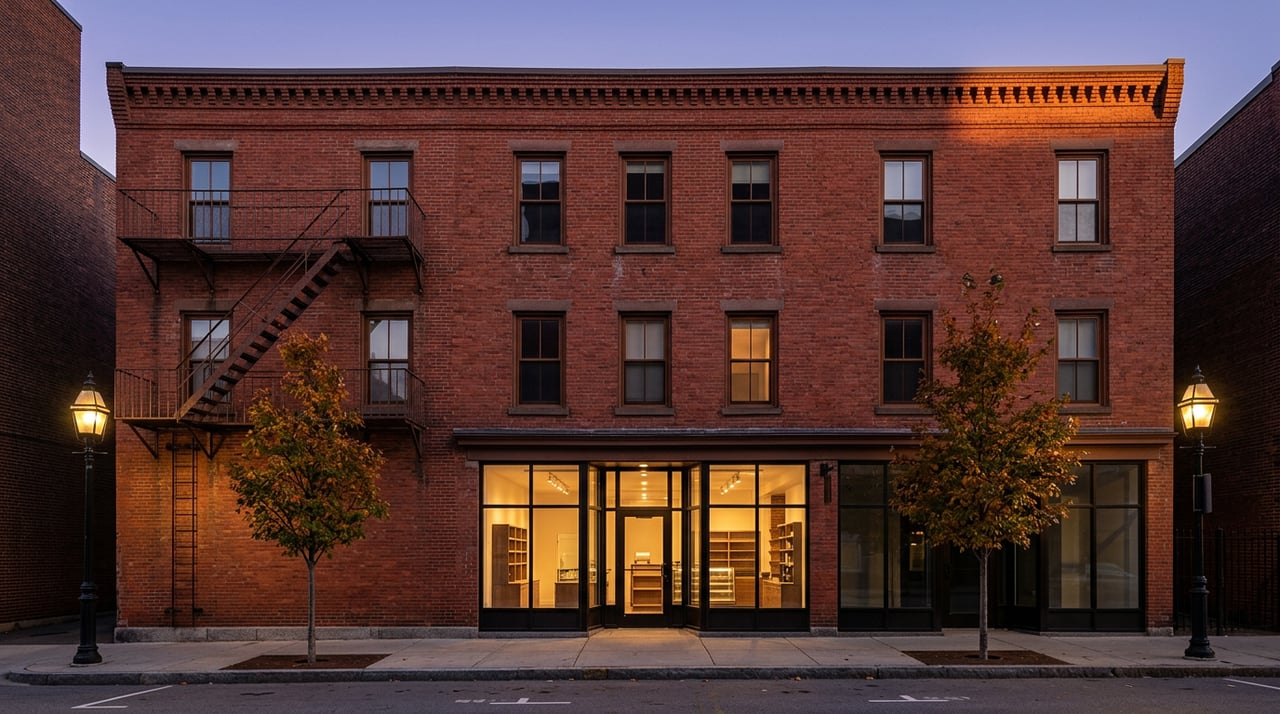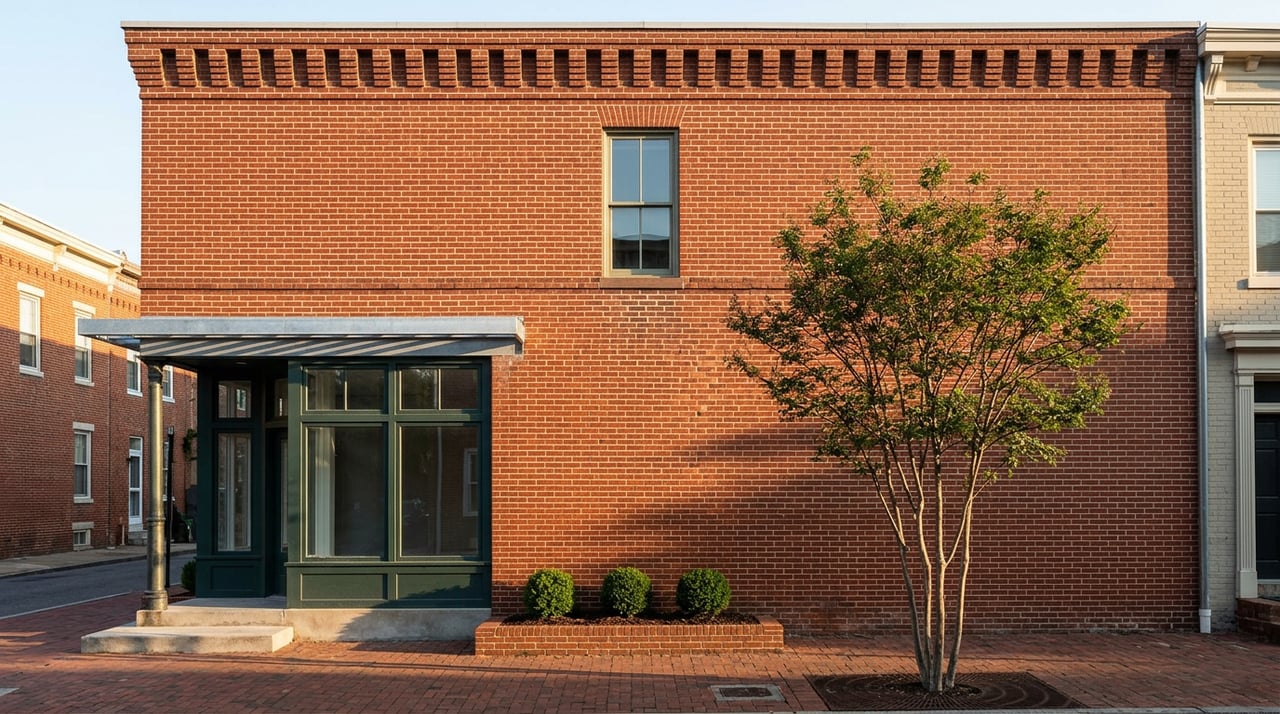
On the evening of August 11, a crowd gathered in front of a three-story brick building at 233 12th Street SE, just south of Lincoln Park. The Capitol Hillbillies played. Someone cut a six-foot ceremonial sandwich. Ward 6 Councilmember Charles Allen stood among neighbors who had spent four years and $1.25 million to make this moment happen: the reopening of Mott's Market, a corner grocery that has occupied that spot since 1916 and sat dark since 2022.
That reopening is worth more than a nice write-up in the neighborhood newsletter. It is the clearest recent example of how Capitol Hill actually responds when something it depends on is at risk of disappearing. And it is not the only test case running right now. A short walk away, on Barracks Row, a June fire gutted four buildings on a stretch of 8th Street that had no equivalent rescue plan waiting in the wings. Compare the two and you get a real answer to a question most neighborhood roundups never ask: when a beloved storefront on the Hill is threatened, who actually gets to decide what happens to it?
The Building Ninety-Four Neighbors Own
Mott's Market isn't a chain reopening under new ownership. It's neighbors who own the building outright. When the century-old grocery closed in 2022, a coalition of Capitol Hill residents didn't wait for a developer to decide what came next. They bought the property for $1.25 million, eventually growing to 94 investor-owners, then spent four years raising additional capital and working through permitting before handing the operation to Peyton Sherwood, a local restaurant industry veteran, to run as a market, cafe, and wine bar.
Michael Skinner, president of the LLC that now owns the building, put it plainly at the reopening: neighbors believed a corner market could be more than a store, that it could be a place where community gets built. Christine Campbell, the group's vice chair, is a third-generation Capitol Hill resident whose grandmother bought a house on Walter Street in 1928. Her family has watched this particular storefront through most of a century. That kind of tenure is part of why the ownership model worked here. Enough people had enough history with the building to organize around saving it, and enough time passed between the closure and the fire risk of losing it for good that a fundraising campaign could actually run its course.
Not Far Away, A Different Kind Of Loss
Contrast that with what happened on the 700 block of 8th Street SE on the night of June 11. A fire that started on a second-story wooden deck spread through four mixed-use buildings, according to Barracks Row Main Street's own community update. The businesses hit hardest were Cask & Barrel Wine & Spirit and Jackson Hewitt Tax Services at 725, the vacant former home of The Ugly Mug and Valor Brewpub at 723, and She Loves Me Flower Shop at 721. A family living above one of the storefronts was displaced.
There was no four-year runway here, no coalition of investors already assembled. The Ugly Mug had closed in October 2025 after 20 years on the Row, and the building had reportedly already sold to new owners planning a restaurant there, before fire ended that plan before it started. As of the most recent public reporting from Barracks Row Main Street, damage assessments were still underway and no rebuilding timeline had been announced. Unlike Mott's, this block doesn't have a ready-made ownership structure to rally around. It has private property owners, insurance adjusters, and a business improvement district trying to coordinate support after the fact.
The difference isn't about how much the neighborhood cares. It's about timing and structure. Mott's Market could be saved because its closure gave residents years to organize a purchase. A fire gives no such window.
Three Ways The Hill Decides
Look closely at what's operating on Capitol Hill this season and you can actually sort the neighborhood's storefronts and public spaces into a small number of decision-making models, each with a different answer to who gets a vote.
| Model | Example right now | Who actually decides |
|---|---|---|
| Neighbor-owned cooperative | Mott's Market, 233 12th St SE | 94 investor-owners |
| Elected community seat | Eastern Market Community Advisory Committee | One DC resident, chosen by committee vote |
| Private commercial lease | South Block juice bar moving into Eastern Market at 720 C St SE | The building's landlord and the incoming tenant |
| Regional infrastructure agreement | Stadium-Armory Station upgrades and the proposed Gold Line bus route | WMATA's board and the DC Council |
That fourth row matters because it shows how far the spectrum runs. WMATA's board unanimously approved agreements with the District this year for a roughly $300 to $400 million upgrade to Stadium-Armory Station and a new bus rapid transit line connecting Union Station to the RFK Campus, with a target of having it running by the stadium's opening day in 2030. Randy Clarke, WMATA's general manager, has said the design phase is now underway. No neighbor coalition organized that decision. It moved through transit agency board votes and City Council testimony, the opposite end of the spectrum from 94 people pooling money to buy a corner store.
South Block, the juice and smoothie chain founded by Amir Mostafavi that started as Campus Fresh at George Washington University in 2006 before expanding to Georgetown, Union Market, and other DC neighborhoods, is opening its newest location inside Eastern Market at 720 C Street SE. That's a straightforward commercial lease. Nobody bought the building. A tenant signed on.
The Governance You Can Actually Join This Month
The Eastern Market Community Advisory Committee sits in the middle of that spectrum, and it's the one model on this list where an ordinary resident can step in without raising six figures. EMCAC holds an open seat for an Independent Community Resident representative, chosen by the committee's own members for a two-year term. The rules are specific: the person elected has to be a DC resident, and can't already hold an officer, director, or committee chair role with any Capitol Hill community organization sitting on EMCAC, and can't be a sitting ANC 6B commissioner. The committee will hold that election at its regular meeting on Wednesday, September 30, at 7 p.m. in the North Hall at Eastern Market. Anyone interested in putting their name forward needs to do it by September 23. Details on how to reach the committee are posted on Capitol Hill Corner's community news site.
That governance thread runs underneath a lot of what's happening around Eastern Market and Barracks Row this month regardless of who's deciding. The Back-to-School Family Day the Capitol Hill BID put on in Eastern Market Metro Plaza on August 29 drew families for a backpack giveaway and a visit from local first responders. The Dog Days of August Jazz series wrapped its run under the farmers' line shed with a free set from saxophonist Gracie Jay. The Capitol Hillbillies keep the dance floor going at Hill Center with their recurring swing and Cajun nights. None of that required a vote or an investor prospectus. It's just the rhythm of a neighborhood that also, when it needs to, organizes itself to buy the building.
That's the real thread connecting a market reopening on 12th Street, a fire recovery on 8th Street, an advisory committee election inside Eastern Market, and a bus line being planned by a regional transit board. Capitol Hill isn't one kind of place making one kind of decision. It's running several different models for who gets a say, at the same time, on streets a few minutes apart. Knowing which model applies to which corner of the neighborhood tells you more about how Capitol Hill actually works than any single roundup of openings and closings ever could.
If you're weighing what any of this means for a home search or a sale on the Hill, from how a corridor's recovery affects nearby property interest to which blocks are governed by neighbor coalitions versus private landlords, Maggie Daley has spent three decades tracking exactly these shifts block by block. Schedule a consultation to talk through what's changing in your part of the neighborhood.